RESEARCH 013D Integration
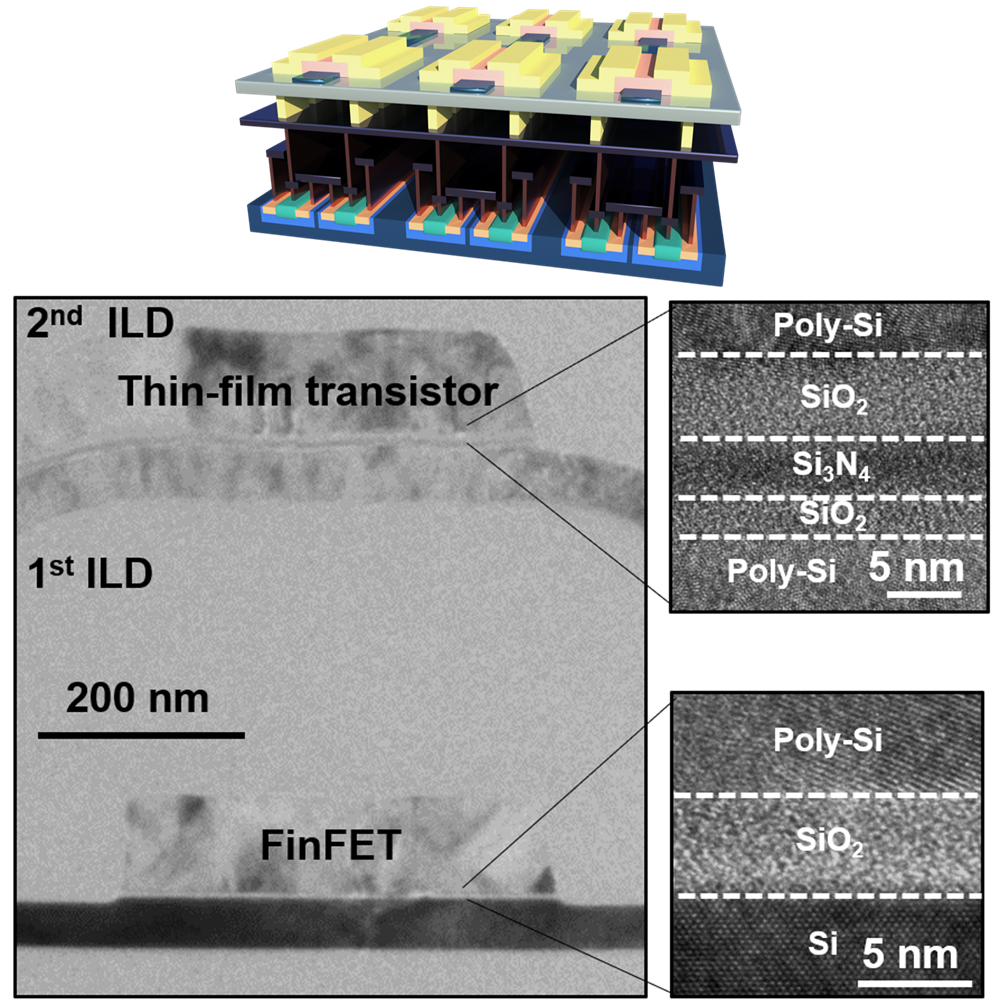
3D integration plays a crucial role in the semiconductor industry, as it significantly boosts chip density while reducing the length of interconnections. In particular, monolithic 3D (M3D) technology, which involves the sequential fabrication of top devices over the bottom devices, allows for high integration density compared to Through Silicon Via (TSV) technology. We develop 3D-integrated logic and memory devices based on a Back-End-of-Line (BEOL) compatible process and wafer bonding technology. These include complementary FET (CFET), 3D/4D DRAM, and 3D/4D NAND. Furthermore, we deploy 3D-integrated devices to various applications such as neuromorphic and quantum computing.
RESEARCH 02Bio-inspired Computing
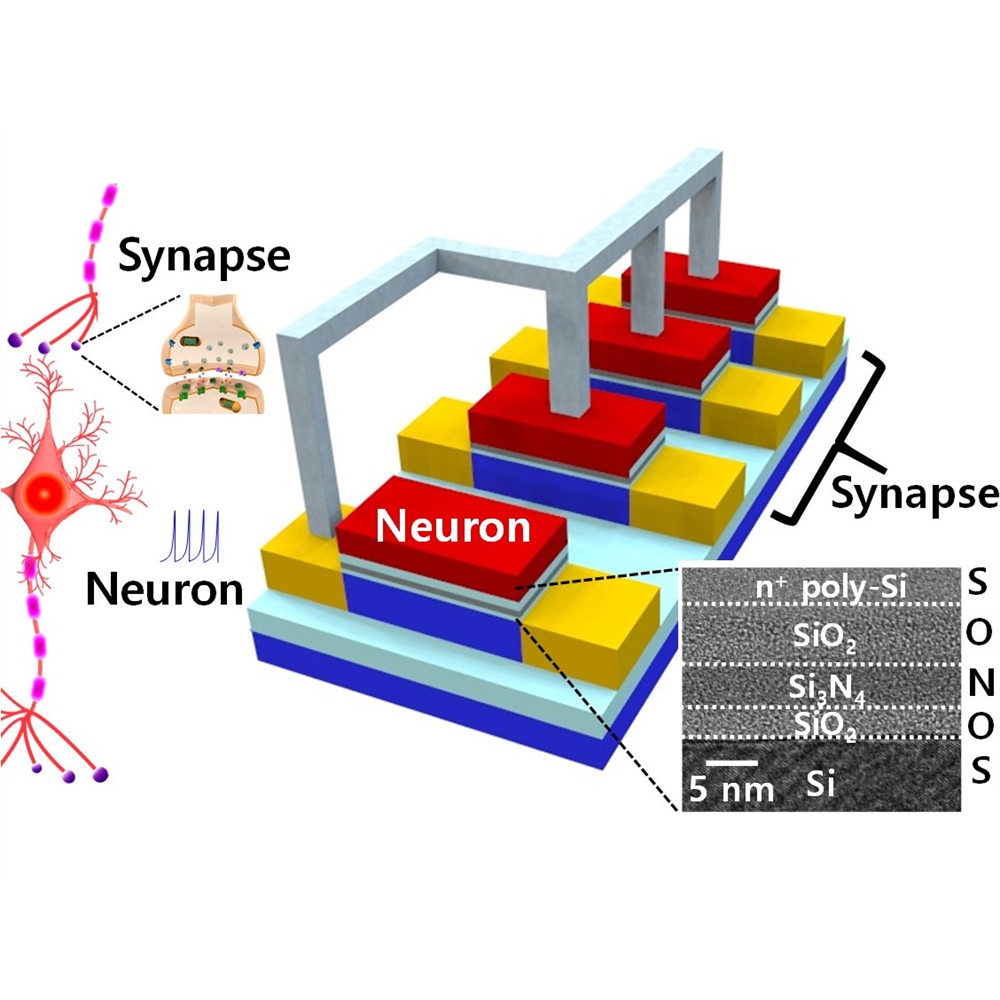
Bio-inspired computing (neuromorphic computing) can perform AI tasks with ultra-low power by mimicking the human brain that consumes only 20 W. To create neuromorphic hardware, it is essential to employ artificial neurons and synapses that mimic the functionalities of biological neural networks. We develop various neuron and synaptic devices, as well as perform system-level studies including algorithms. Furthermore, we develop diverse neuromorphic sensors that have both neuromorphic and sensory functions, enabling in-sensor computing for ultra-low power Internet of Things (IoT) sensors.
RESEARCH 03Quantum-inspired Computing
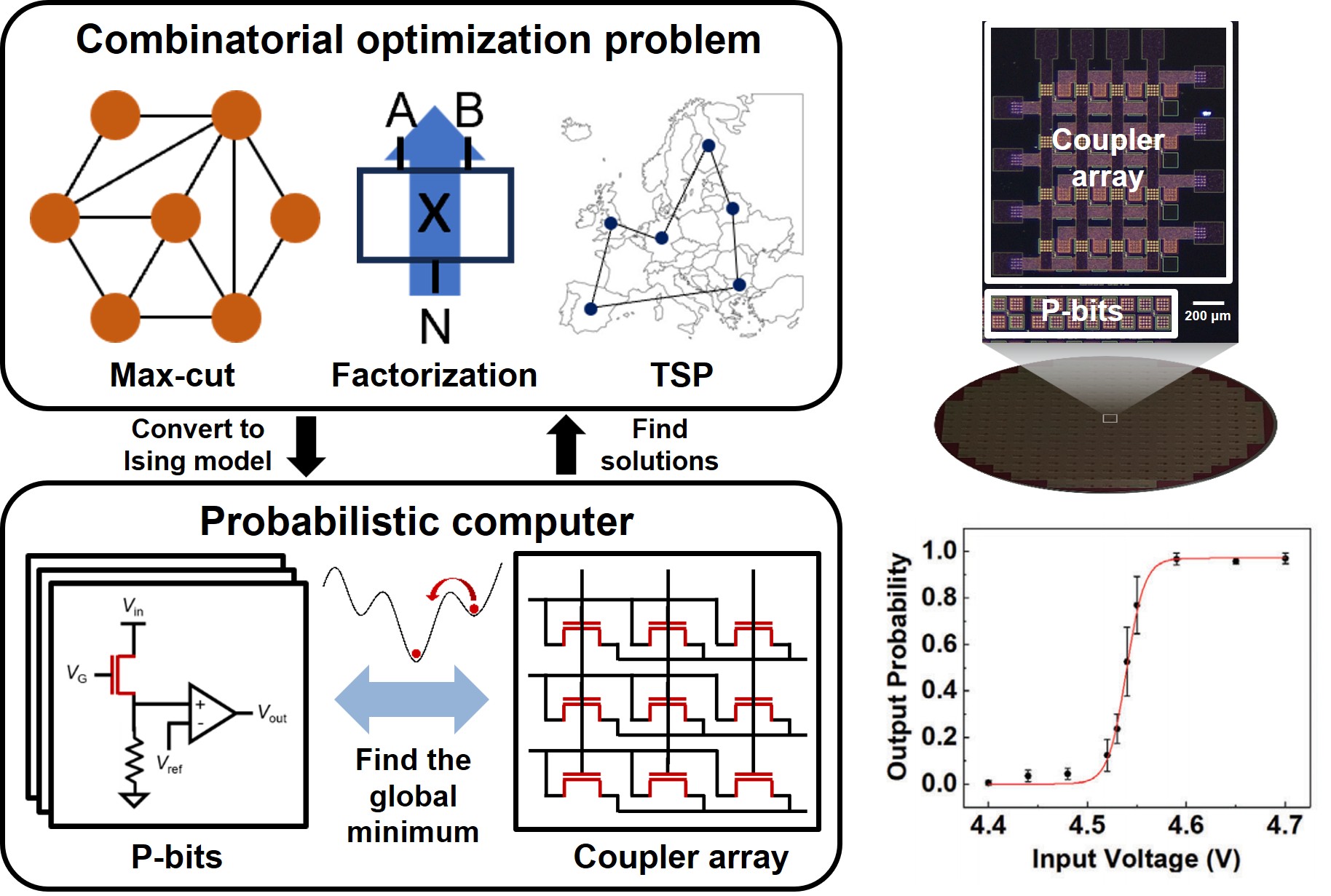
Quantum-inspired computing can efficiently solve combinatorial optimization problems that challenge conventional processors. Probabilistic computing uses p-bits, stochastic elements that fluctuate between 0 and 1, to efficiently explore solution spaces at room temperature, offering a practical alternative to quantum hardware. Similarly, Ising machines reformulate hard combinatorial tasks into spin models, where the collective dynamics naturally converge toward near-optimal solutions. By combining device-level innovations with system-level architectures, we create scalable, low-power platforms for quantum-inspired computing hardware.
RESEARCH 04Device Reliability
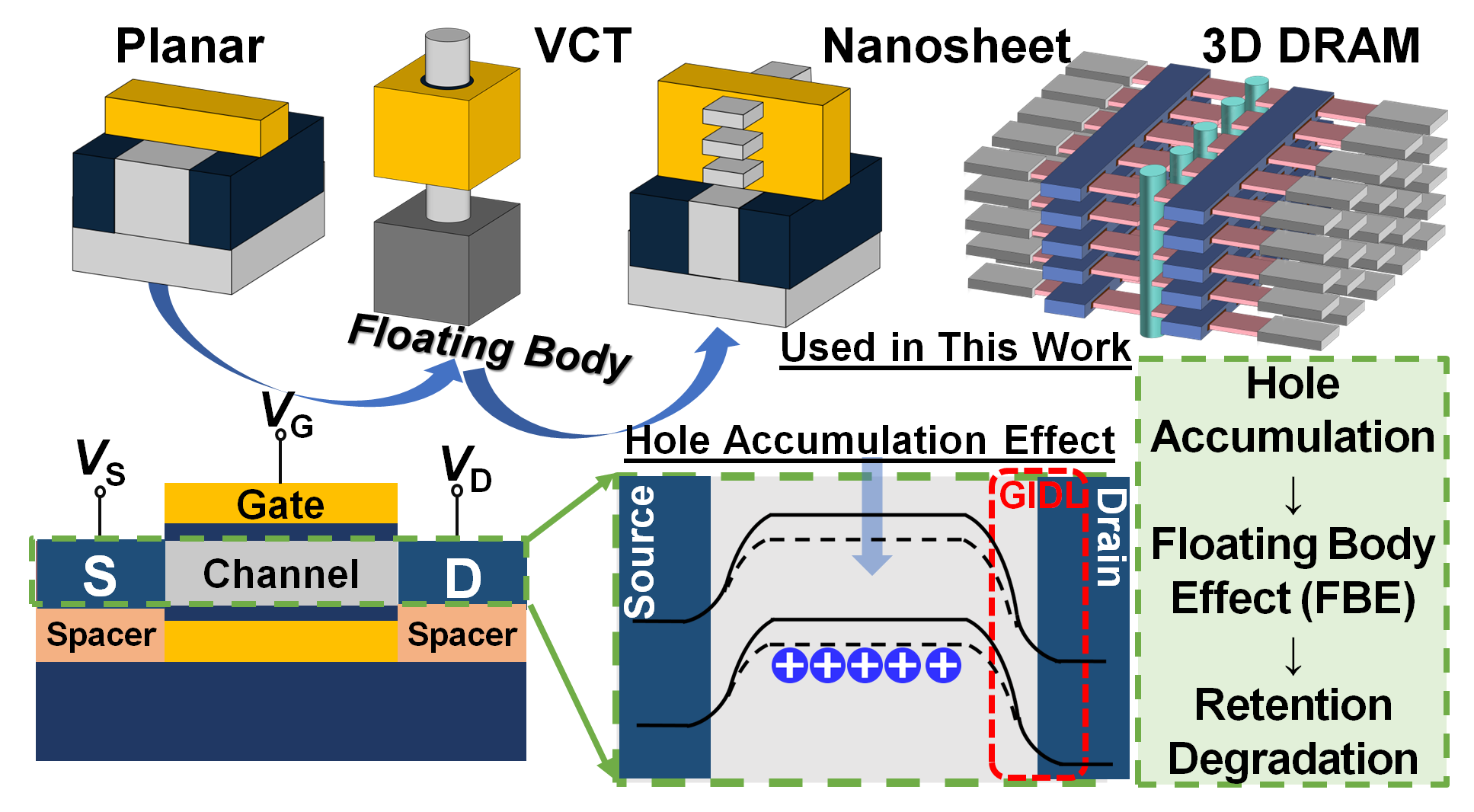
As semiconductor devices are aggressively scaled and stacked into three dimensions, ensuring their reliability throughout the operating lifetime becomes as important as their raw performance. A variety of degradation mechanisms — including the floating-body effect (FBE), self-heating effect (SHE), and dielectric/interface degradation such as bias-temperature instability and time-dependent dielectric breakdown — induce threshold-voltage shifts, increased leakage, and eventual device failure. We investigate the physical origins of these mechanisms through pulsed and transient electrical characterization, and design device structures and operation schemes that suppress them. Our work spans both silicon and oxide-semiconductor channels, covering a wide range of devices from logic and DRAM to NAND, thin-film transistors (TFTs), and capacitors. Ultimately, we aim to accurately predict device lifetime and enhance the reliability of next-generation, highly integrated semiconductor hardware.
PROJECTSProjects
Ongoing
- 2026–2030저전압·고집적·고신뢰성 다결정 실리콘 기반 3D 적층 Cap-less 1T DRAM 어레이 개발한국산업기술기획평가원 · 민관공동투자 반도체고급인력양성
- 2026전략적 국제 연구 교류 허브 구축 사업서울대학교
- 2026–2027첨단소재센터삼성전기
- 2025–2028DS부문 신진산학과제삼성전자
- 2025–2026DRAM 미래기술협의회삼성전자
- 2025–20276종 센싱이 가능한 3차원 집적 구조의 멀티모달 인-센서 뉴로모픽 칩 플랫폼 개발한국산업기술기획평가원
- 2025–2026확률론적 컴퓨팅용 실리콘 소자 및 어레이 기술 개발한국과학기술연구원
- 2025–2026뉴런과 시냅스가 3차원 집적된 구조의 고집적 뉴로모픽 하드웨어 개발서울대학교
- 2024–2027상용 파운드리 Si CMOS 플랫폼과 통합 설계·제작된 고성능 IGZO TFT 시냅스 소자정보통신기획평가원
- 2024–2027실리콘 기반 확률적 비트 소자를 이용한 대용량 확률 컴퓨팅 하드웨어한국연구재단
Completed
- 2026Visiting Professor ProgramSK하이닉스
- 2025–2027실리콘 채널-MIEC 프로그래밍 터미널을 이용한 인공 시냅스 메모리 신개념 소자 개발한국연구재단
- 2025–2026AI 기반 PCB 자동 설계 DB 구축럭스로보
- 2024–2025IoT 산업 혁신을 위한 전자회로 설계 AI 기술 개발서울경제진흥원
- 2024–2025대규모 확률 컴퓨팅 하드웨어 제작국가나노인프라협의체